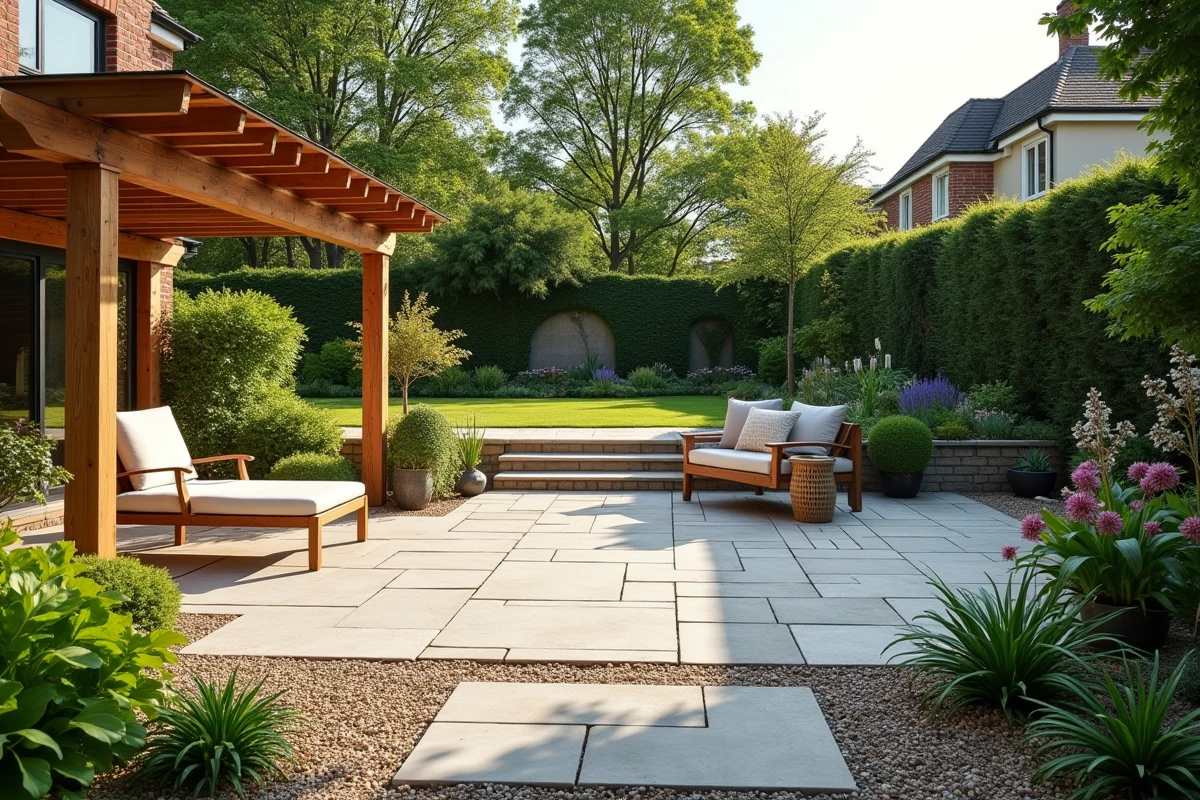
Designing an outdoor space involves balancing technical, regulatory, and usage constraints that traditional guides rarely address together. Since October 2024, decree n°2024-1123 mandates the planting of local pollinator-friendly species in new developments in urban areas, which changes the available plant palette. PMR accessibility, water management, and the choice of flooring materials are as crucial to the outcome as a beautiful garden lounge.
1. Stable and PMR Accessible Flooring
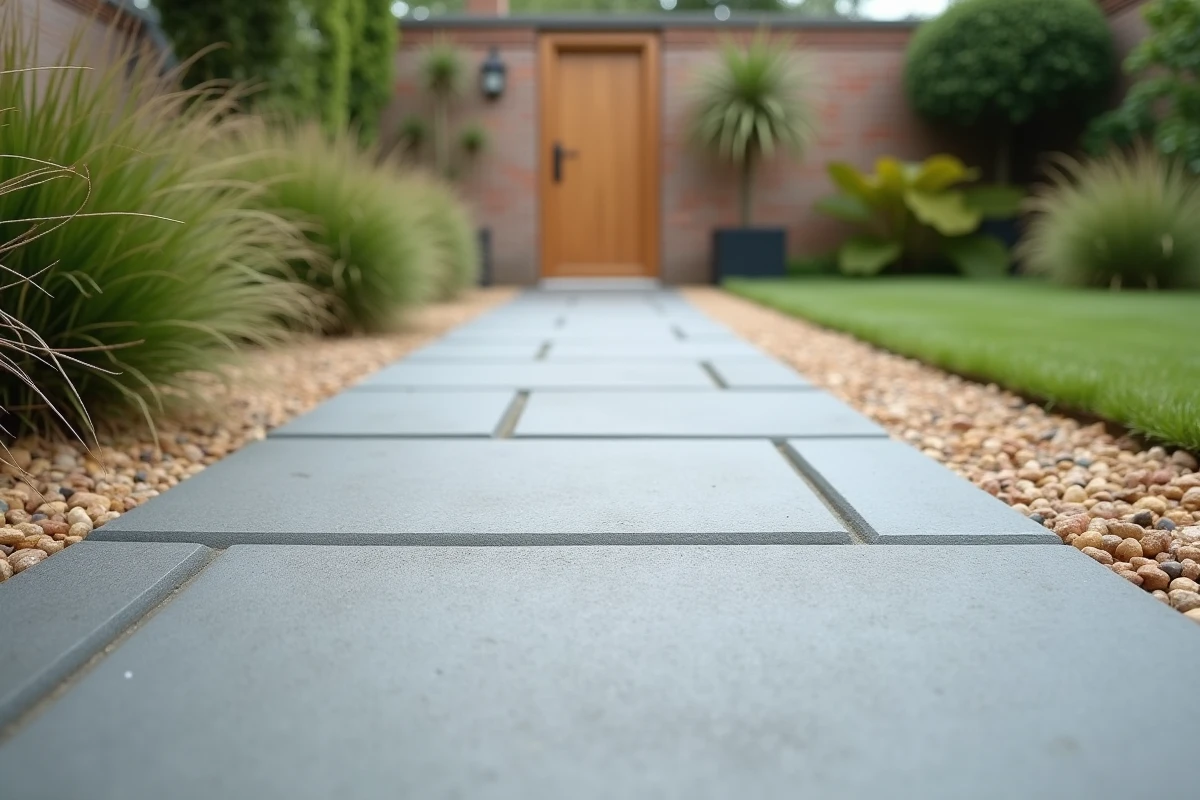
The choice of flooring determines both the circulation and accessibility of the outdoor space. For a wheelchair or stroller to move freely, the ground must be hard, non-loose, and without a bump greater than two centimeters. Narrow-joint reconstituted stone slabs or composite planks laid on joists meet this criterion.
Decorative gravel, which is very common, poses a real rolling problem. If you prefer a mineral look, a honeycomb stabilizer keeps the aggregates in place and makes the surface walkable. This solution also serves for drainage, a point discussed later.
Field reports vary on permeable resin: some installers report quick clogging in shaded areas, while others note decent performance over several years. The local climatic context remains decisive.
2. Gentle Sloping Pathway Instead of Stairs
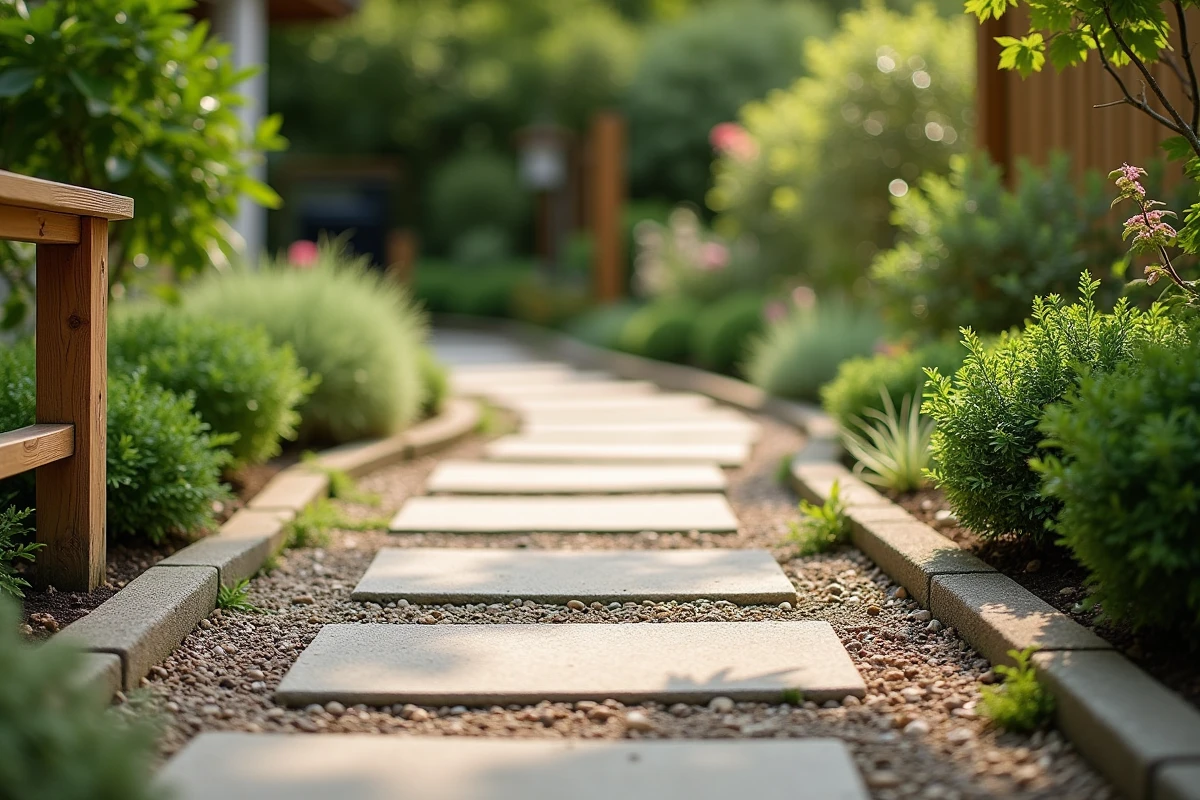
A slightly sloping terrain often leads to steps. For a functional and accessible layout, a gently sloping ramp (less than five percent) is a better alternative to stairs. It benefits all users, not just those with reduced mobility.
Tips for outdoor space design often include pathways, but rarely address slope. Edging the pathway with a contrasting material (brick, corten steel) enhances visual recognition and adds a graphic element to the garden.
3. Composite Fencing for Structure Without Heavy Maintenance
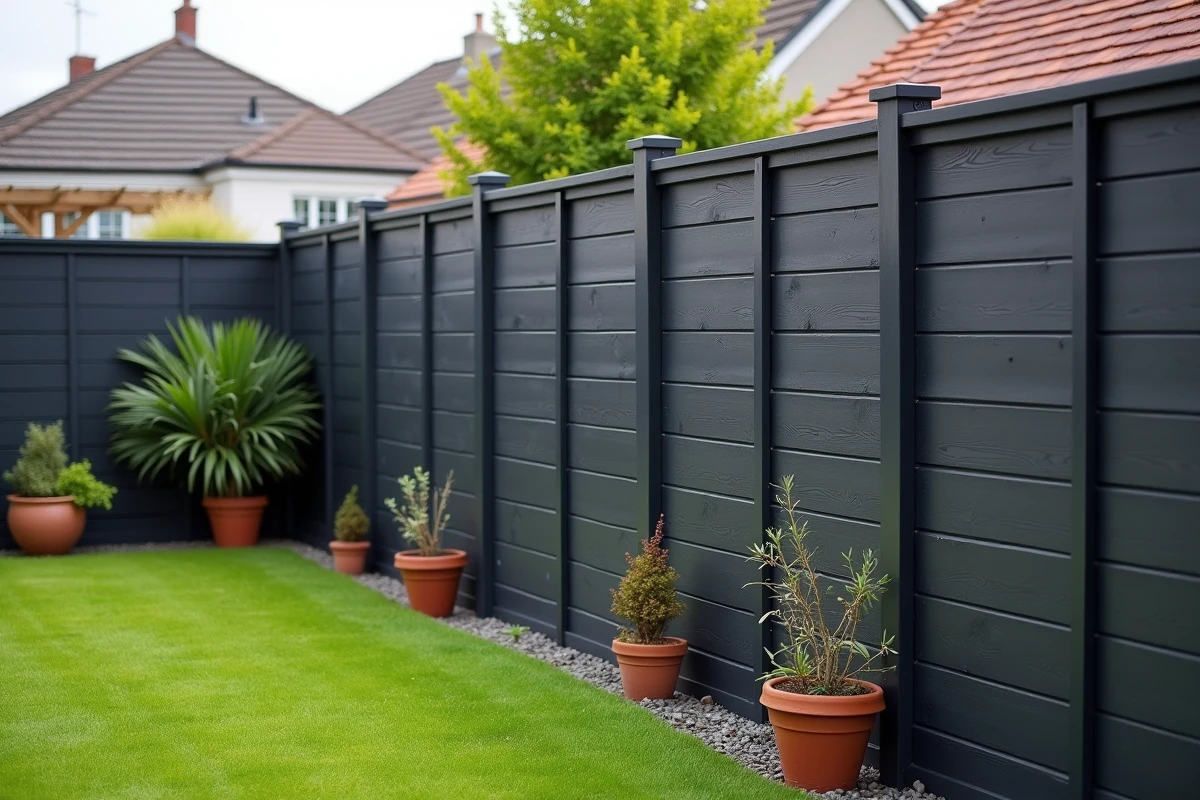
PVC remains common for fencing, but wood-polymer composite offers better aging and a look closer to natural wood. Unlike solid wood, it requires neither staining nor annual fungicidal treatment.
A well-installed composite fence structures the garden and reduces maintenance to simple washing. The horizontal slats, fixed to aluminum posts, also allow for spacing adjustments to filter the view without completely partitioning the space.
4. Bioclimatic Pergola to Modulate Shade
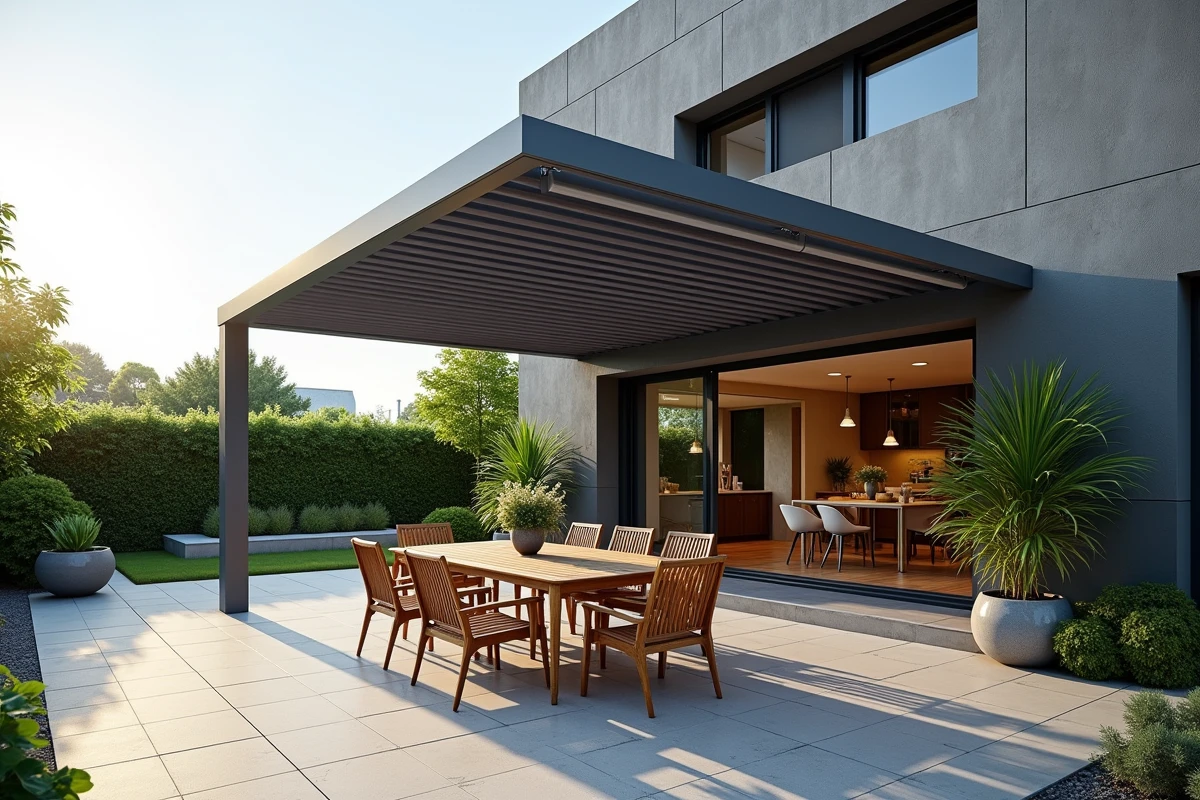
A canopy or umbrella manages shade but not ventilation. The bioclimatic pergola with adjustable slats combines both: closed, it protects from rain; open, it allows air and light to circulate. It represents a higher investment than a stretched fabric, but the versatility across four seasons justifies the difference.
For accessibility, ensure that the slat orientation control is reachable from a seated position, either by remote control or by a wall switch placed at an appropriate height.
5. Local Pollinator-Friendly Species Required by Decree 2024-1123
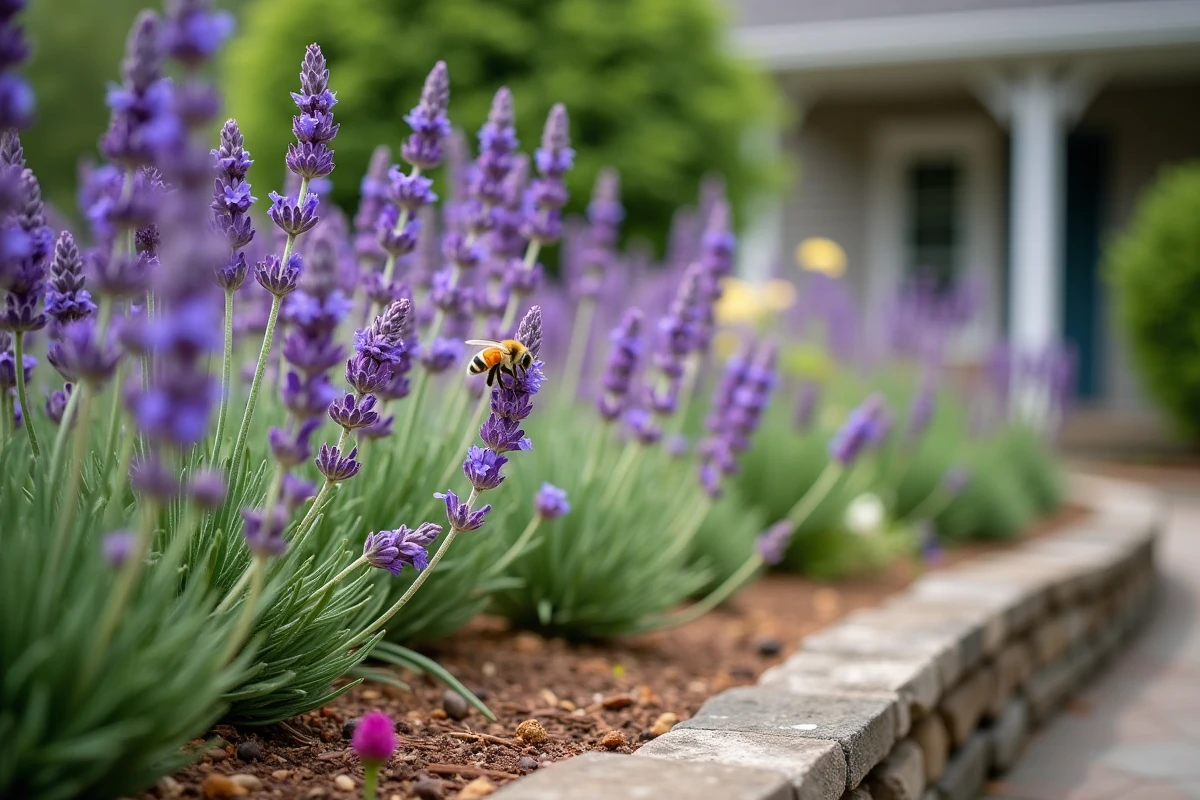
Since October 2024, new outdoor developments in urban areas must include local pollinator-friendly species, in accordance with decree n°2024-1123 on biodiversity. Lavender, thyme, common sage, or phacelia meet this requirement while needing little watering.
This regulatory constraint becomes a design asset: a pollinator garden adds color, attracts pollinators, and reduces water consumption compared to traditional grass. Integrate it along pathways to combine aesthetics and compliance.
6. Hybrid Green Wall in Dry Climate
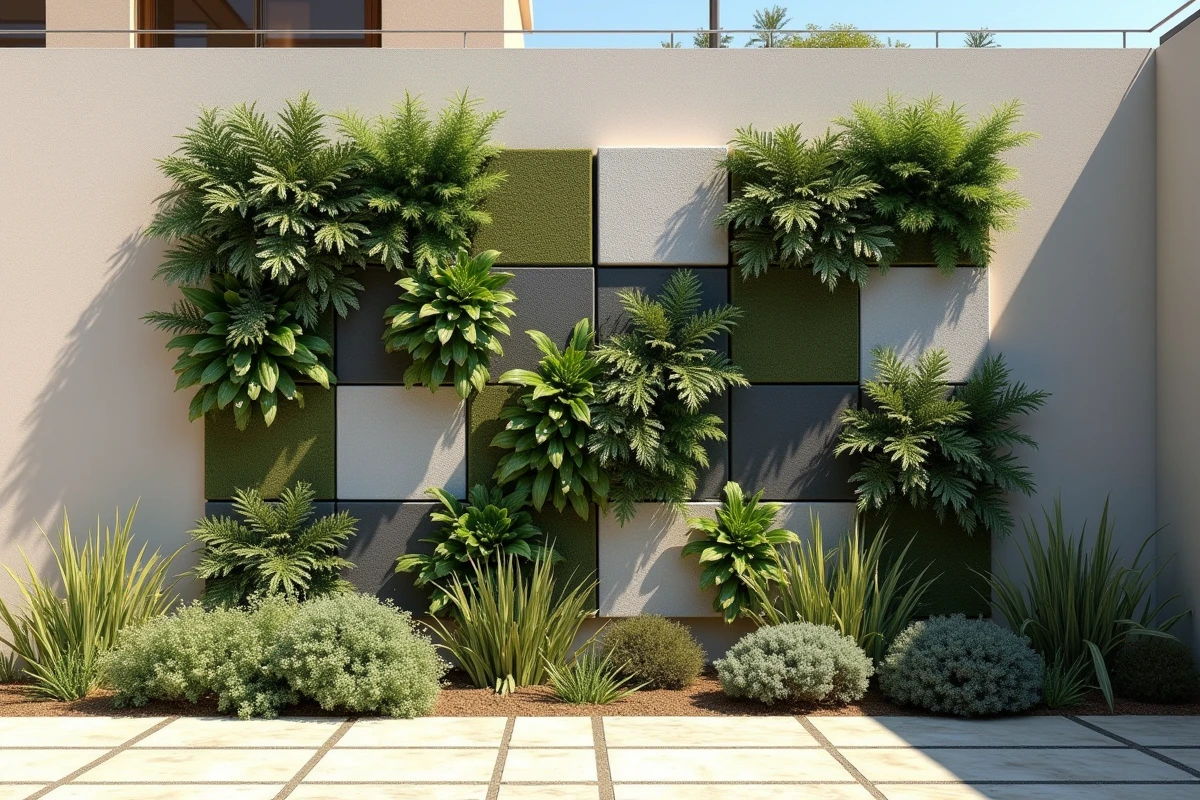
INRAE has published comparative tests showing that hybrid vertical installations (green wall combined with hydroponics) outperform horizontal gardens in water efficiency in Mediterranean climates. For a small outdoor space, a green wall frees up ground area and offers a real space-saving advantage.
The supporting structure must be fixed to a load-bearing wall or a self-supporting frame. The closed water circuit limits consumption but requires regular maintenance of the pumping system. Ensure easy access to the pump for a person with reduced mobility or a service provider.
7. Buried Water Collector Instead of Aerial
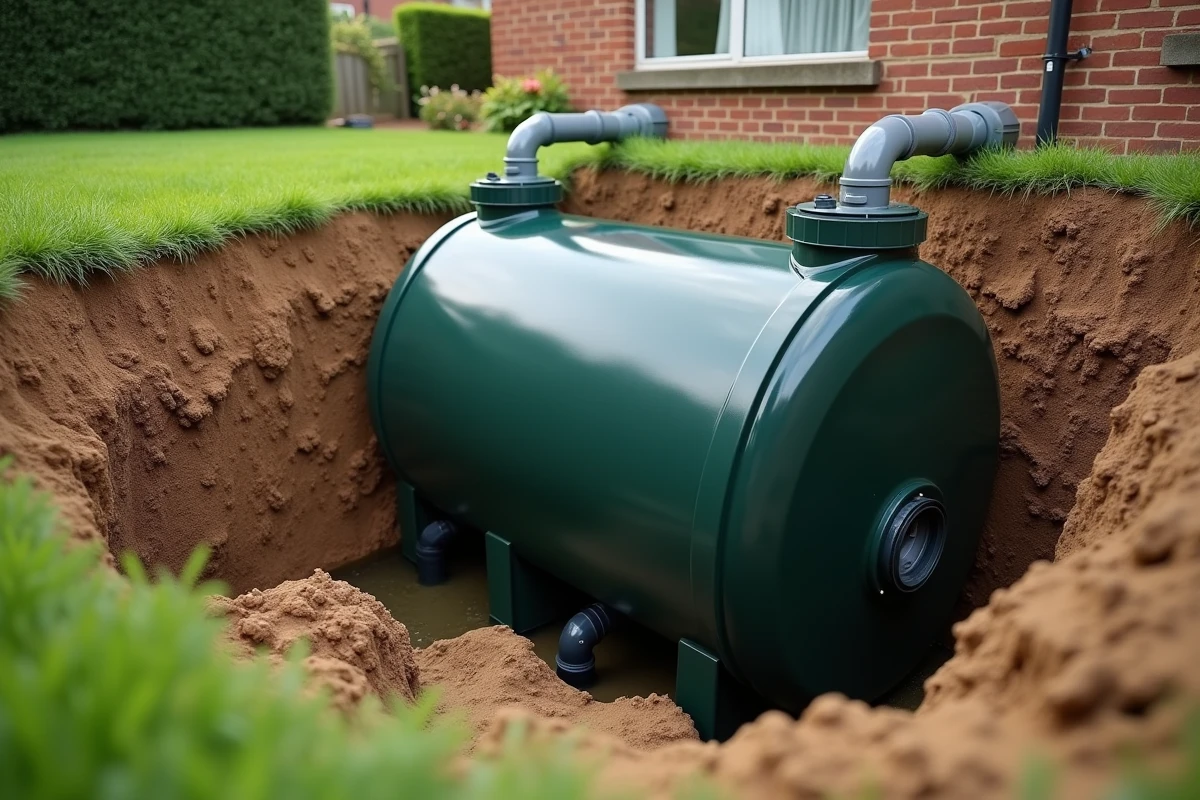
An aerial rainwater collector clutters the space and creates a visual obstacle. The buried version frees up the surface, eliminates the risk of tipping, and keeps the water at a stable temperature, which limits algae growth.
Connecting to gutters and the overflow to a drain requires initial excavation. In return, the garden gains usable surface area and aesthetic coherence. For watering the pollinator beds, a simple surface tap is sufficient.
8. Low Voltage Outdoor Lighting with Ground Marking
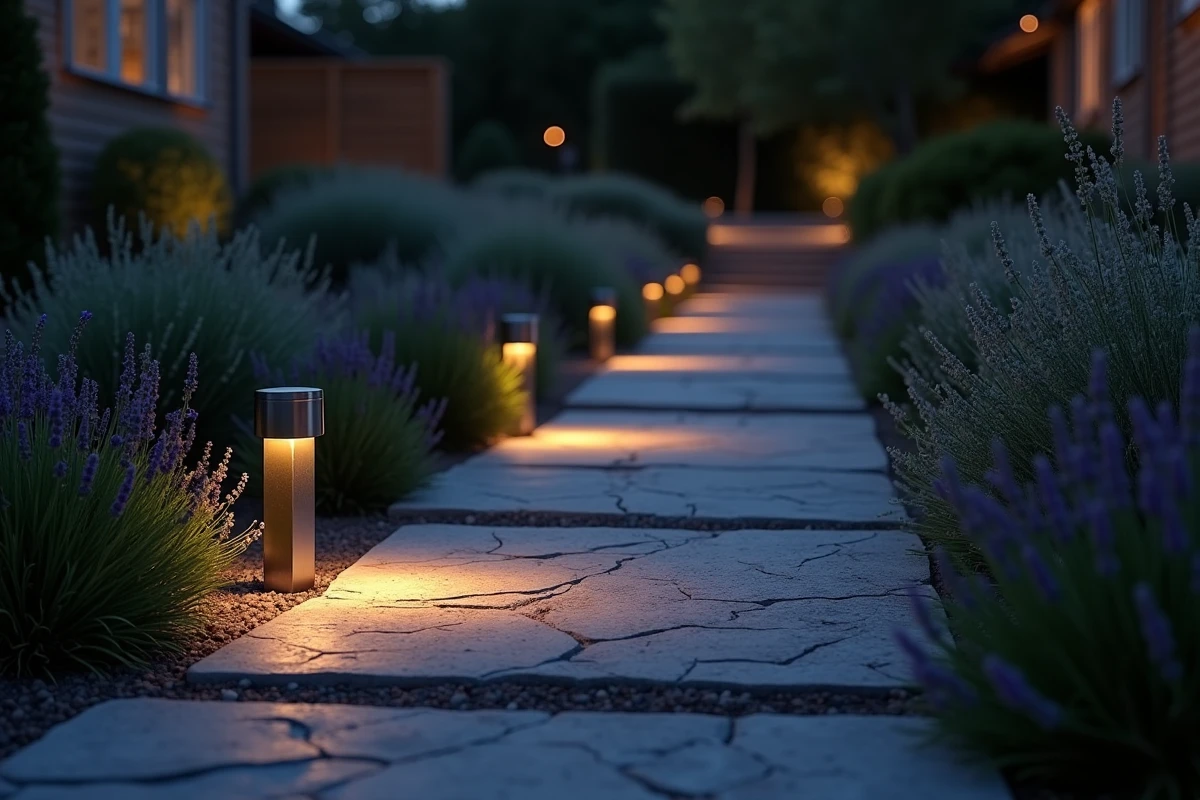
Ground-level marked lighting serves two functions: it secures nighttime circulation and guides movement without glare. Low voltage recessed LED spots (12V) consume little energy and can be installed without deep trenching.
Place them along accessible pathways, at direction changes, and near any potential steps. A twilight sensor automates lighting and avoids searching for a switch in the dark.
9. Repositionable and Ergonomic Garden Furniture
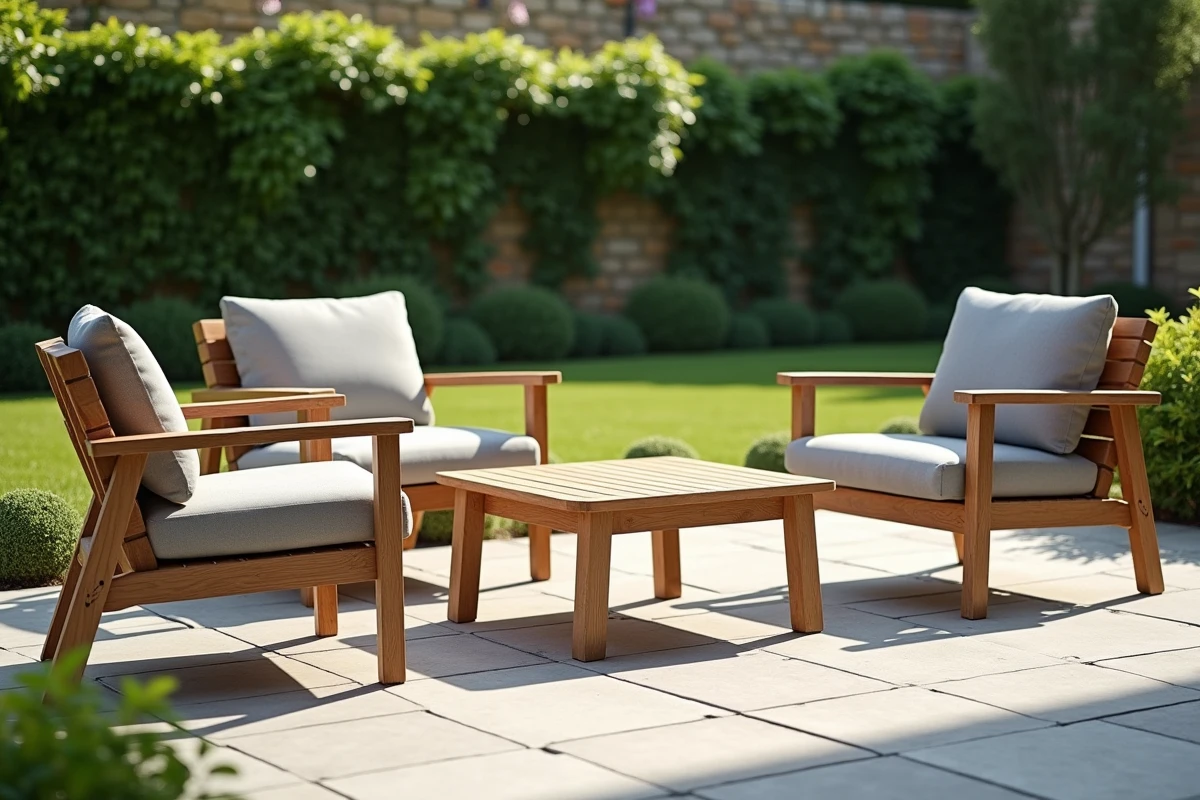
Fixed furniture limits rearrangement possibilities. Lightweight and stackable tables and seating made of aluminum or woven resin allow for reconfiguring the terrace according to use: dining, reading, entertaining.
Wide armrests and a seat at a good height facilitate transfer from a wheelchair. This ergonomic detail, rarely mentioned in outdoor decor guides, significantly changes the daily use of the terrace for a person with reduced mobility or a senior.
10. Zoning by Vegetation Instead of Walls
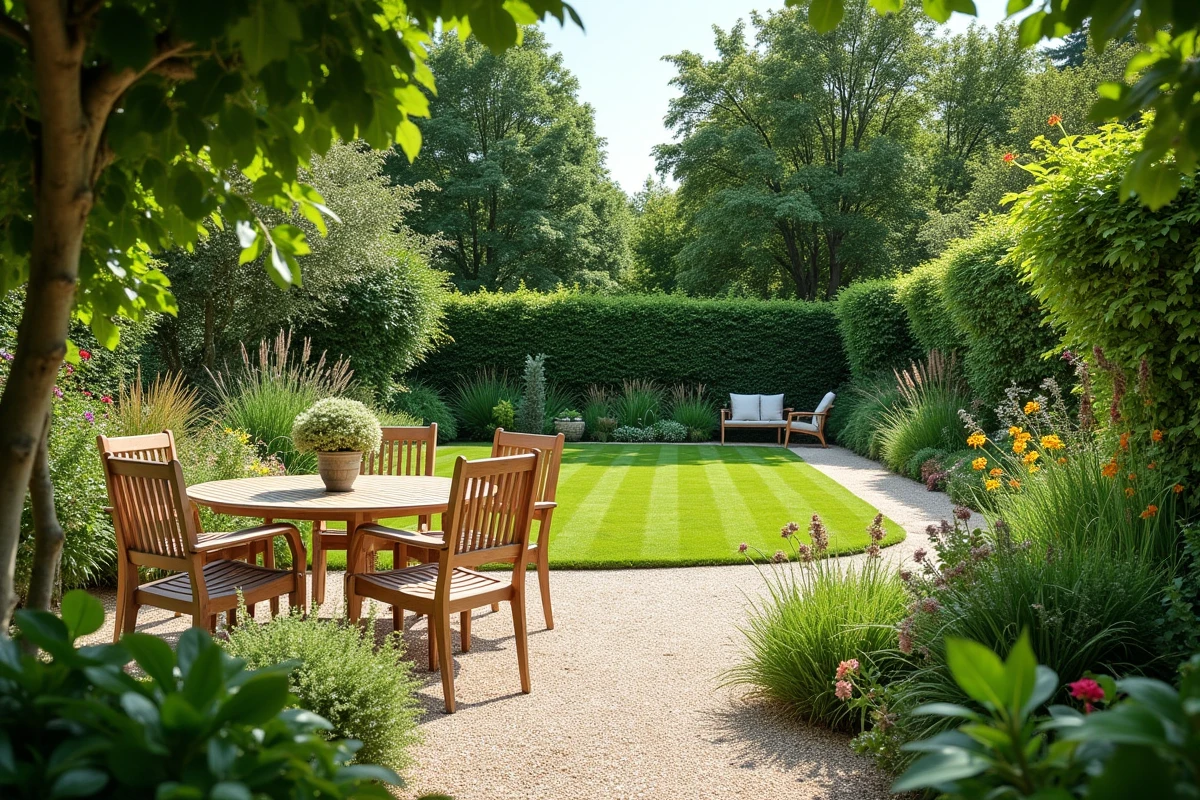
Separating living, play, and vegetable garden spaces with masonry walls is expensive and creates obstacles. Low hedges, ornamental grasses, or raised planters on wheels delineate areas without blocking circulation.
- Buxus or lavender hedge trimmed to less than sixty centimeters for visual identification without obstruction.
- Planters on wheels to reposition zoning according to the season or event.
- Tall grasses (miscanthus, pennisetum) at the back of the bed to filter wind without blocking the view.
This principle of flexible vegetative zoning adapts well to both small balconies and large gardens. It respects accessibility requirements while adding volume and texture to the outdoor layout.
An enjoyable outdoor space relies less on the decoration budget than on the coherence between flooring, vegetation, circulation, and light. Integrating PMR accessibility from the design stage avoids costly revisions and benefits all users, from young children to seniors.