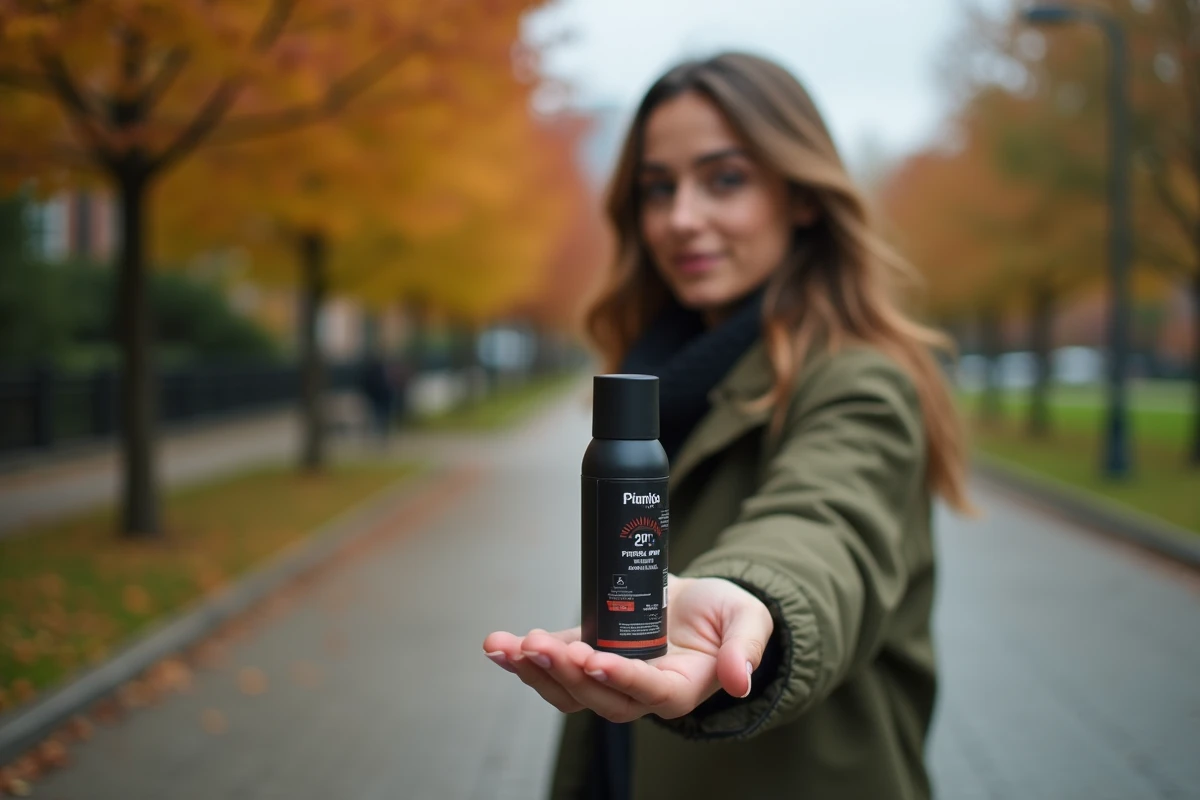
Decathlon no longer offers pepper spray in its regular aisles or on its public website. This absence from the 2025 catalog still surprises consumers accustomed to finding this type of product in large sporting goods stores. Understanding why, and knowing where to turn legally, requires untangling the French regulatory framework and the recent evolution of the defense aerosol market.
Decathlon and Pepper Spray: What the Catalog Really Offers
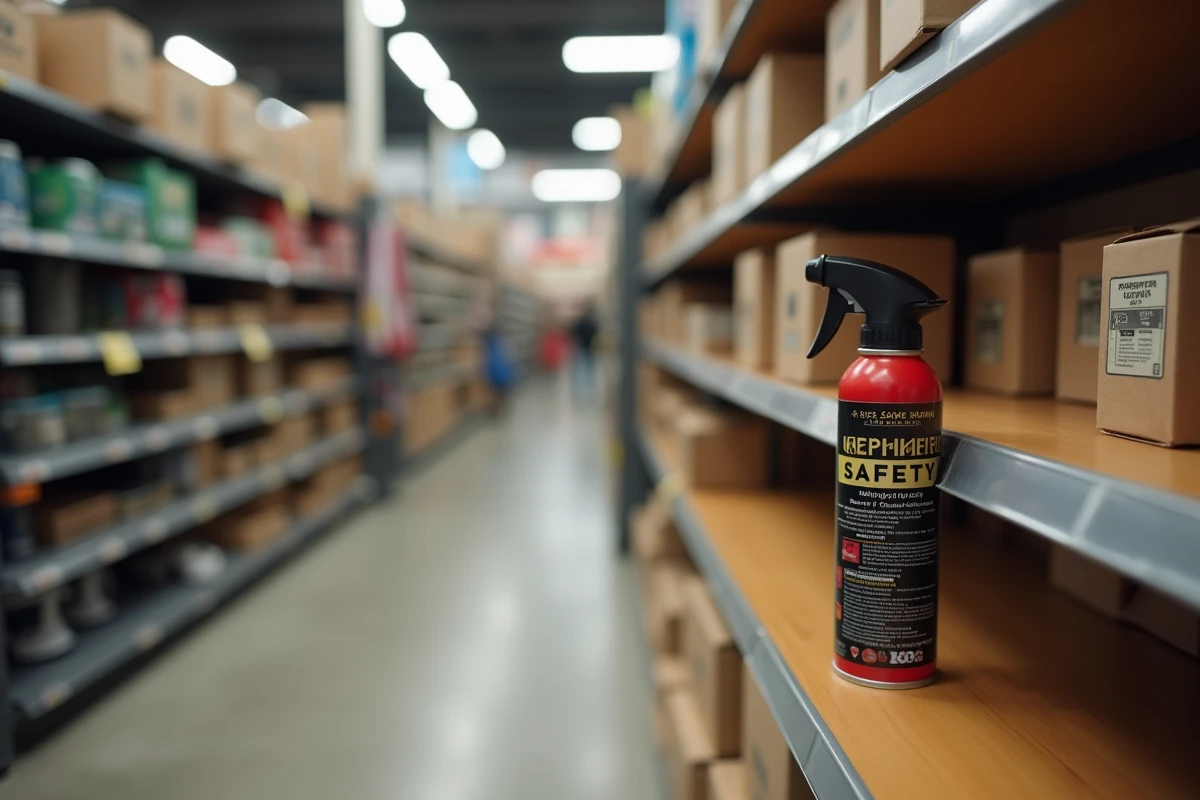
Browsing through Decathlon’s self-defense section, one finds training equipment, body protection, and sometimes accessories for combat sports. Pepper or CS gas anti-aggression sprays are no longer included. The brand effectively directs buyers to physical armories or specialized personal defense websites.
This absence is explained by the legal nature of the product. A pepper spray is classified as a category D weapon under French law, which imposes traceability and advisory obligations at the time of sale. A general sporting goods store is not intended to take on this role, and Decathlon has clearly chosen to withdraw from this segment.
For anyone looking for the price of Decathlon pepper spray, the answer can be summed up in one sentence: one must now turn to online gunsmiths or specialized security retailers, where prices vary depending on the format and active agent.
100 ml Threshold and Category D: The Legal Pivot to Know
The classification of defense aerosols in France is based on a seemingly simple criterion: the 100 ml capacity constitutes the legal limit for free sale. Below or at this threshold, the product falls under category D. Above this, it shifts to category B, which is subject to prefectural authorization.
This classification dates back to the decree of September 6, 2013, which reorganized all categories of weapons around three criteria: the repeatability of fire, the capacity without reloading, and concealability. Defense aerosols of less than 100 ml fall into category D alongside touch shockers, batons, and tonfas.
Conditions for Purchase and Carrying
Purchase is free for any adult. No prior declaration is required, and no permit is requested. Possession at home does not pose legal difficulties.
Carrying in public is subject to a different rule. One must justify a legitimate reason, a notion that the law does not precisely define. During a check, it is the enforcing officer who assesses the situation: a person returning home alone at night in an isolated area is not in the same position as a passerby in the city center on a Sunday afternoon.
- Free purchase from age 18, without administrative formalities
- Home possession allowed without restriction
- Outdoor carrying conditioned on a legitimate reason, assessed on a case-by-case basis by law enforcement
- Use regulated by the rules of self-defense (proportional response to a real and current threat)
Urban Formats and Self-Defense Kits: How the Market Adapts
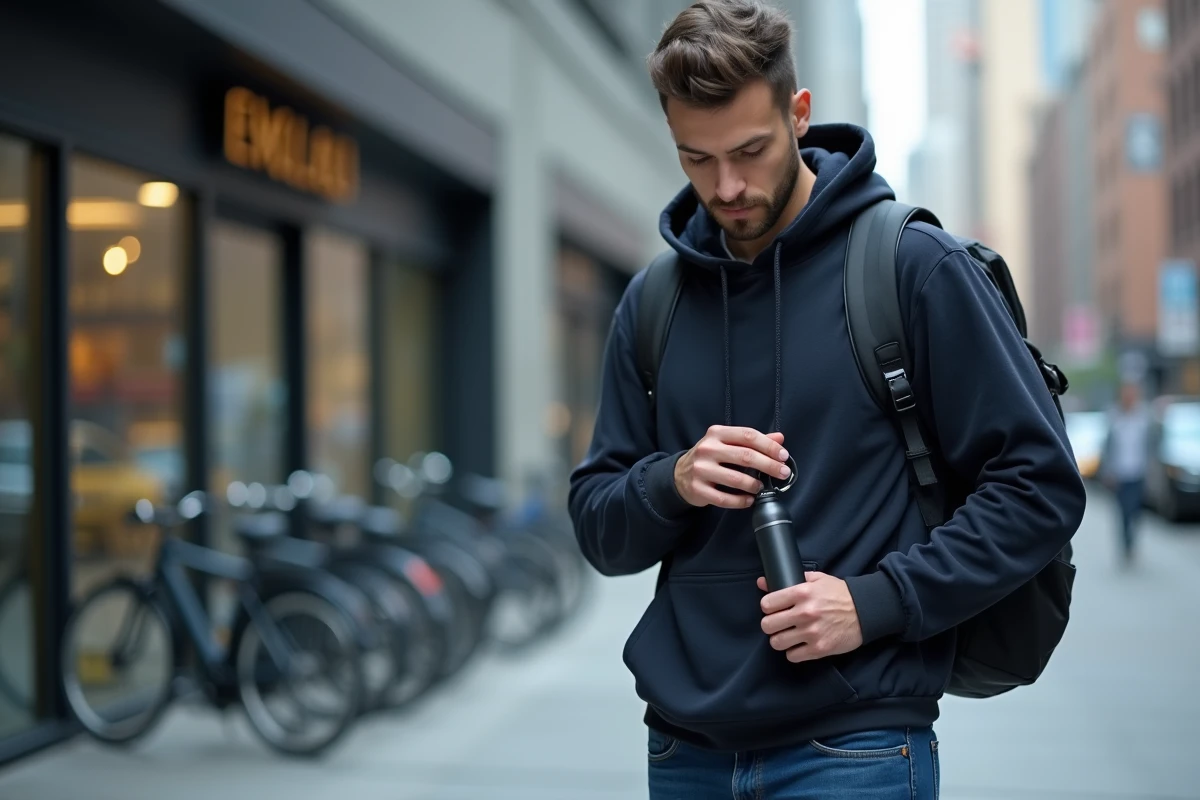
The market for defense aerosols has evolved in recent years towards compact formats, between 25 and 75 ml, designed for discreet carrying in urban environments. These small containers comply with the legal limit while fitting in a pocket or handbag.
Specialized manufacturers now offer kits combining a pepper spray with other devices: personal alarm, touch shocker, tactical flashlight. The marketing of these packs consistently emphasizes the mention “category D weapon, free sale to adults”, indicating that legal education is part of the commercial argument.
Pepper gel is gaining ground over traditional CS gas. Its jet projection reduces the risk of blowback into the user’s eyes in windy conditions, a concrete advantage outdoors. In confined spaces, CS gas in mist covers a larger area, but gel remains easier to direct towards a specific target.
Pepper Spray on Airplanes and Transport: Prohibitions Not to Ignore
One of the most common blind spots concerns air transport. Defense aerosols are prohibited in both cabin and hold, without exception. Many travelers still equate these sprays with simple cosmetic aerosols and find their product confiscated at security checks, or even face reporting.
In public transport (metro, bus, train), the situation is more nuanced. Carrying remains subject to the condition of a legitimate reason. A late trip on a transport network may constitute an acceptable context, but the decision always lies with the inspecting officer.
Risks Incurred in Case of Violation
Carrying a pepper spray without a legitimate reason exposes one to a 4th class fine. Using a defense aerosol outside the strict framework of self-defense can lead to prosecution for voluntary violence with a weapon. The criminal qualification then depends on the circumstances and any potential consequences for the targeted person (eye irritation, breathing difficulties).
- On an airplane: prohibited in cabin and hold, systematic confiscation at security check
- On a train or metro: tolerated if legitimate reason, assessed on a case-by-case basis
- In a car: possession in the vehicle is treated as transportation, not carrying, which reduces legal risk
The French legal framework allows the purchase and possession of pepper sprays for any adult, but carrying and use remain governed by flexible legal notions, left to the discretion of law enforcement and courts. Purchases are made from licensed gunsmiths or specialized personal defense retailers, the only points of sale to offer these products with appropriate regulatory advice.