Every year, thousands of French nationals born outside France need to provide a French birth certificate for routine procedures such as renewing a passport, getting married or registering with a consulate. A document issued by the authorities in their country of birth is not enough.
They need a certificate recorded in the French civil registers, held by the Central Civil Registry Service (SCEC) in Nantes or by the relevant consulate. The process depends on each person’s circumstances, and delays can become a real problem when an administrative deadline is approaching.
French birth certificate already transcribed: applying online
If the birth has already been transcribed into the French consular registers, the process is relatively straightforward. The official online service lets you request a full copy or an extract of the birth certificate. The document can be downloaded from the applicant’s personal account as a digitally signed certificate, rather than being sent only by post.
This option for electronic delivery follows a recent change in the law. It shortens processing times for people whose certificate is already registered. The stated processing time for this type of request is around 20 days. This should not be confused with the time needed to transcribe a foreign birth, which is a separate and longer procedure.
If you want to obtain a French birth certificate abroad, the first step is to check whether the birth has already been transcribed. A quick call to the SCEC or the consulate responsible for the place of birth can confirm this.
Transcribing a foreign birth: procedures and pitfalls by country
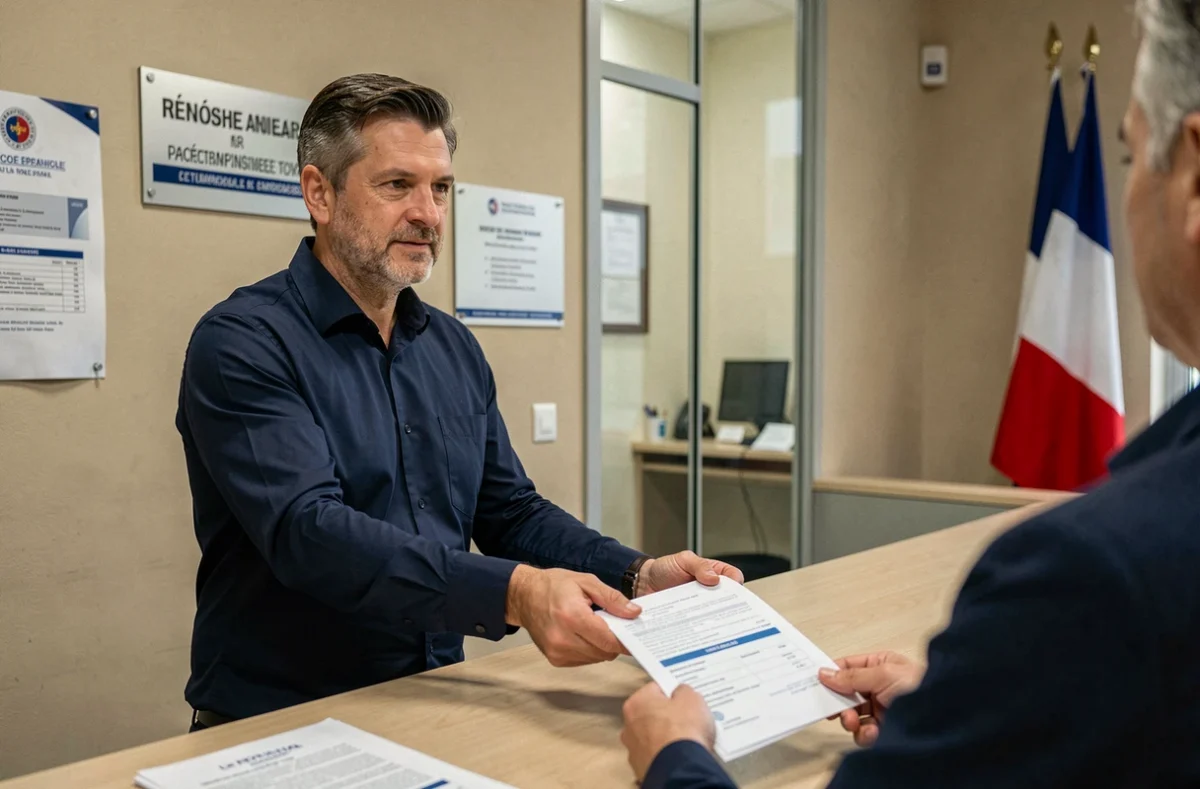
If the birth has never been transcribed, you must complete this step before requesting a French certificate. Transcription means entering the details from the foreign birth certificate into a French consular civil register. It is required for every child born abroad with at least one French parent.
The procedure is not the same everywhere. Depending on the country of residence, the application must be submitted to the relevant consulate or sent by post to the SCEC in Nantes. Requirements vary from one consular office to another, so assuming that the same process applies everywhere is a common mistake. Some consulates require additional documents, such as a certified translation, an apostille or legalisation, that others do not.
The documents generally required are:
- A full copy of the foreign birth certificate, translated by a certified translator if it is not in French
- Proof of French nationality for one or both parents (passport, national identity card or certificate of nationality)
- The family record book, if the parents have one
- Any authentication document required by the issuing country (apostille or legalisation by the embassy)
Transcription times vary considerably. Some consulates process applications within a few weeks, while others take several months. There is no statutory maximum processing time, leaving applicants uncertain when their application is delayed.
Upcoming administrative deadline and transcription still pending: what are your options?
This is the most stressful situation. A wedding is planned in two months, a passport needs renewing for a business trip, or an inheritance file requires a French birth certificate, but the transcription has not yet been completed. What can you do?
The first step is to contact the consulate or the SCEC directly, explain the urgency and request priority processing. Some consular offices may issue a provisional birth certificate or a statement confirming that the transcription is in progress. Some French authorities may accept this document as temporary proof.
For a wedding in France, in some cases the public prosecutor may authorise the ceremony based on foreign documents accompanied by a certified translation while the final transcription is pending. This option depends on the court and the documents submitted.

For a passport or national identity card application, the absence of a transcribed French birth certificate makes the process more complicated. A certificate of French nationality, issued by the judicial court, may be used as an alternative to prove parentage and nationality, but obtaining one also takes time.
In summary, the options in an urgent situation are:
- Request expedited processing from the consulate or the SCEC and provide evidence of the deadline
- Request a statement confirming that transcription is in progress, to use as temporary proof
- For a wedding, contact the public prosecutor in the place where the ceremony will take place
- For an identity document, explore the option of applying for a certificate of French nationality through the judicial court
French birth certificate for use abroad: apostilles and EU exemptions
A frequently overlooked situation is when a French birth certificate is needed not for a French authority, but for submission to a foreign one. In this case, a separate authentication procedure may be required: an apostille issued by the relevant court of appeal, or legalisation by the Ministry for Europe and Foreign Affairs.
For civil status documents submitted in another European Union country, an exemption from these formalities may apply under the EU regulation on public documents. A standard multilingual form attached to the certificate then replaces the certified translation and apostille. This little-known simplification can save time and money.
Check with the receiving foreign authority which requirements apply before paying for a translation or apostille, to avoid unnecessary steps. The European multilingual form is free and can be requested at the same time as the birth certificate.
The process for obtaining a French birth certificate if you were born abroad comes down to one simple distinction: if the birth has already been transcribed, you can apply online and receive the document electronically within a reasonable timeframe. If it has never been transcribed, processing times depend on the consulate and country concerned, with no guaranteed timeline. Starting the process well before any administrative deadline remains the safest approach.