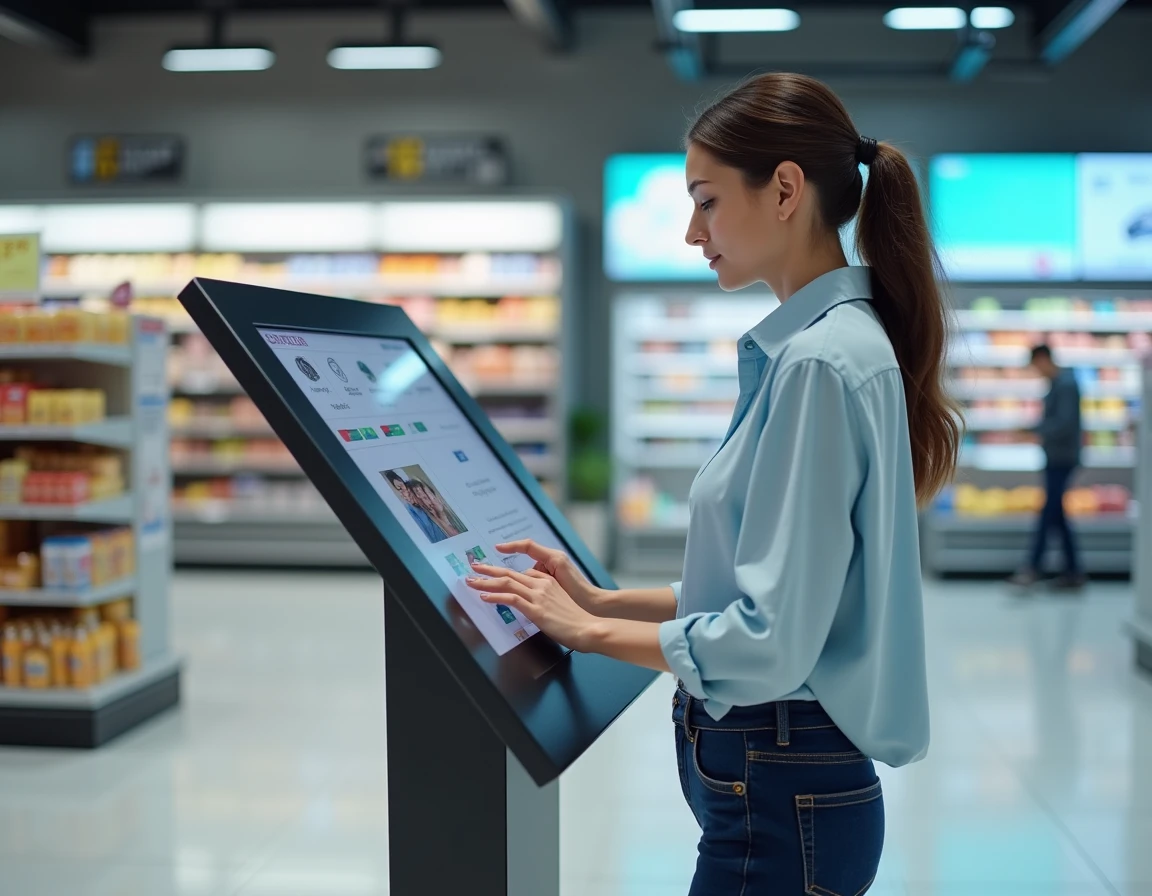
The printing kiosks installed in some Carrefour hypermarkets allow you to obtain a paper document in just a few minutes, without an appointment or personal equipment. The principle is based on a self-service terminal equipped with a touchscreen, a removable media reader, and, depending on the store, a connection to cloud services.
How a Carrefour in-store printing kiosk works
A self-service printing kiosk is an autonomous terminal connected to a laser or inkjet printer. The user transfers their file, selects their settings (format, color, number of copies), and starts the printing directly from the screen.
The key point to remember before heading out: each Carrefour store locally decides its printing offer. Hours, available formats, color or black-and-white options, and even the presence of the kiosk vary from one location to another. A call to the customer service of the relevant store can prevent an unnecessary trip.
To delve into the steps and discover practical tips, the self-service document printing at Carrefour is the subject of a dedicated guide that details each action.
File formats accepted by self-service kiosks
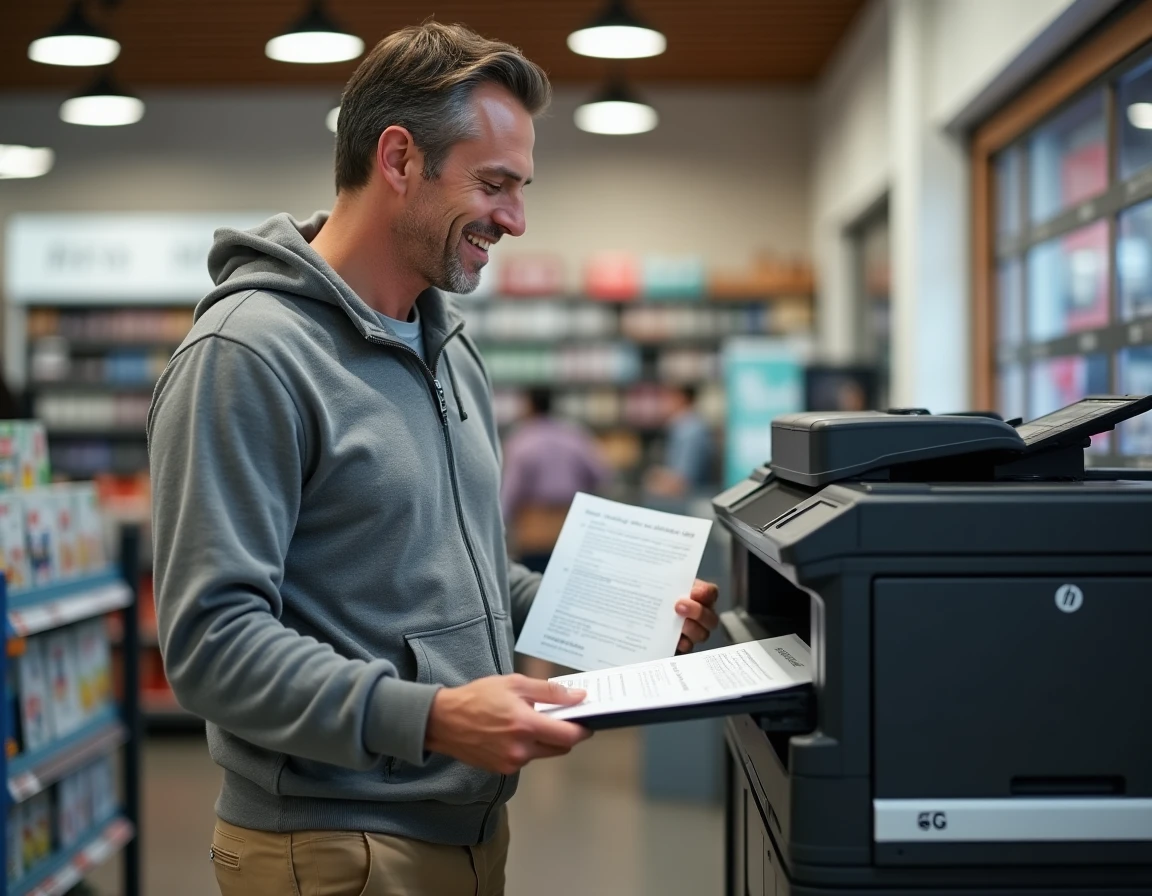
The question of file transfer is often the one that holds people back. Three methods cover the majority of cases.
- USB drive or memory card: the most reliable method. The kiosk reads common formats (PDF, JPEG, PNG). Simply insert the media into the designated port and select the file on the screen.
- Cloud connection (Google Drive, Dropbox): recent kiosks integrate direct access to online storage spaces. The user logs into their account from the touchscreen, without needing a USB drive or email sending.
- Email sending: some kiosks have a dedicated address. The document sent as an attachment appears in the terminal’s print queue after a few moments.
The PDF format remains the safest for preserving layout. A Word file or spreadsheet may lose its fonts or layout during the final rendering.
Settings to check before starting a print
Pressing “Print” without checking the settings often results in poorly framed pages or a higher cost than expected. A few settings deserve particular attention.
Page format and orientation
The majority of kiosks offer A4 format in portrait. If the document is in landscape (a wide table, a schedule), this must be specified manually. Some stores also offer A3 format, but this option is not systematic.
Color or black and white
Black and white printing costs significantly less than color. For a CV, an administrative form, or a contract, black and white is sufficient. Reserving color for photos or documents where visuals truly matter helps limit the bill.
Double-sided and number of copies
Double-sided printing reduces the number of sheets and the total cost. This function is available on most recent kiosks. Checking the output on the preview before validation prevents wasting paper on a misconfiguration.

Scanning and quick copying: complementary functions
The Carrefour kiosks are not always limited to printing. Several terminals include a flatbed scanner that allows you to scan a paper document to a USB drive or cloud space.
This function is useful for digitizing a receipt, a letter received, or a signed document. The resulting file is generally in PDF format, directly usable by email or for administrative uploads.
Quick copying works on the same principle as a traditional photocopier: place the original on the glass, select the number of copies, and the kiosk reproduces the document. For a faithful copy, check that the output format matches that of the original (A4 to A4, no automatic reduction).
Preparing your file before going to the store
A poorly prepared file at home results in wasted time at the kiosk. A few precautions taken in advance can change the experience.
- Convert the document to PDF from any word processing software (the “Export to PDF” function exists in Word, LibreOffice, Google Docs).
- Check the margins: printers do not cover the extreme edge of the sheet. Leave at least a few millimeters of margin on each side.
- Name the file clearly. On a shared kiosk, finding “scan_final_v3_bis.pdf” among other files complicates selection.
- Store the file on a USB drive AND in a cloud space, as a backup solution if either transfer method does not work on the store’s kiosk.
A document ready to print, properly formatted and saved in the correct format, transitions in seconds from digital media to paper. The preparation of the file is as important as the handling of the kiosk.
Last point to keep in mind: self-service kiosks sometimes have a queue during peak hours, especially on Saturday mornings. Opting for time slots during the week or early afternoon allows access to the terminal without waiting.